
Learn How Spray Foam Works
Get an in-depth look at spray foam—what it is, how it’s applied, how it performs, and why it’s a trusted solution for modern insulation projects.

Modern Insulation Technology
What is Spray Foam?
Spray foam insulation is a high-performance insulation system that expands on application to create an air-tight thermal barrier. During installation, two components chemically react, expanding to seal gaps, cracks, and cavities. This process improves energy efficiency, reduces air leakage, and strengthens the building envelope. Spray foam is widely used in residential, commercial, and roofing insulation applications for long-term performance.

Types of Spray Foam
Flexible Foam Solution
Open-cell spray foam is a lower-density, flexible material used primarily for interior insulation and air sealing applications.
Key Features:
- Expands fully to fill wall cavities and voids
- Effective air sealing and sound dampening
- Ideal for interior walls, attics, and ceilings
- More cost-effective for large residential applications
- Vapor-permeable for moisture management
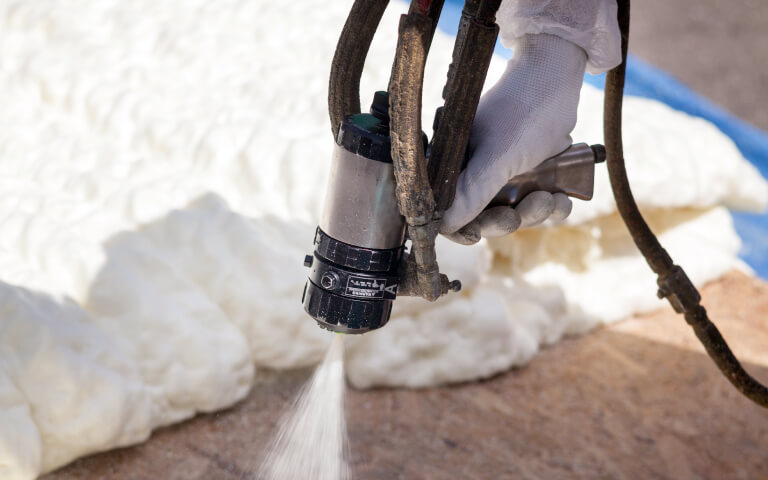
Dense, Durable Protection
Closed-cell spray foam insulation is a rigid, high-density material offering superior insulation value, moisture resistance, and structural reinforcement.
Key Features:
- Higher R-value per inch for maximum thermal performance
- Adds structural strength to walls and roofing systems
- Acts as a moisture and vapor barrier
- Ideal for exterior, roofing, and high-moisture environments
- Performs well in extreme temperature conditions
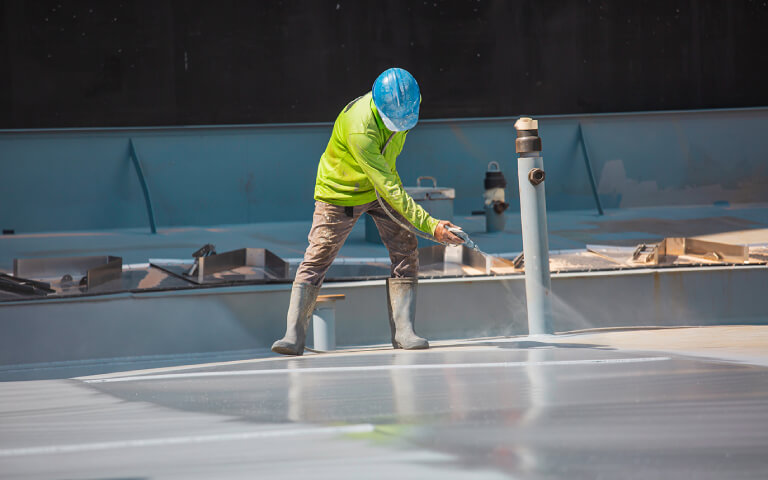
Performance in Action
Where & Why Spray Foam is Used
Spray foam insulation is used across residential, commercial, and industrial projects because it provides insulation, air sealing, and moisture control in a single application.
Common Applications:
- Residential insulation (attics, walls, crawl spaces)
- Commercial buildings and warehouses
- Roofing systems and roof insulation restoration
- Cold storage and temperature-controlled environments
- Concrete lifting and structural stabilization
Why It’s Used:
- Improves energy efficiency and reduces utility costs
- Creates a continuous air barrier for building envelopes
- Helps meet modern energy codes and building standards
- Provides long-term durability and performance
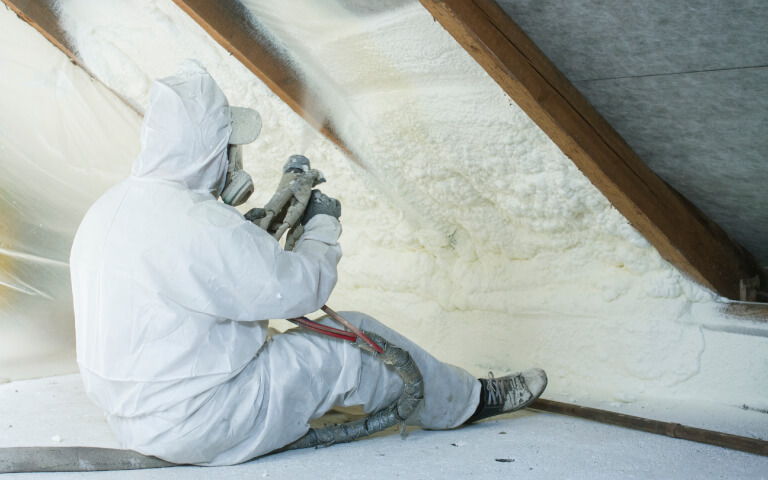
Work Safe, Spray Smart
Safety and Training Basics
Proper spray foam insulation training and safety procedures are essential for ensuring safe application, consistent results, and compliance with industry standards.
Key Safety Practices:
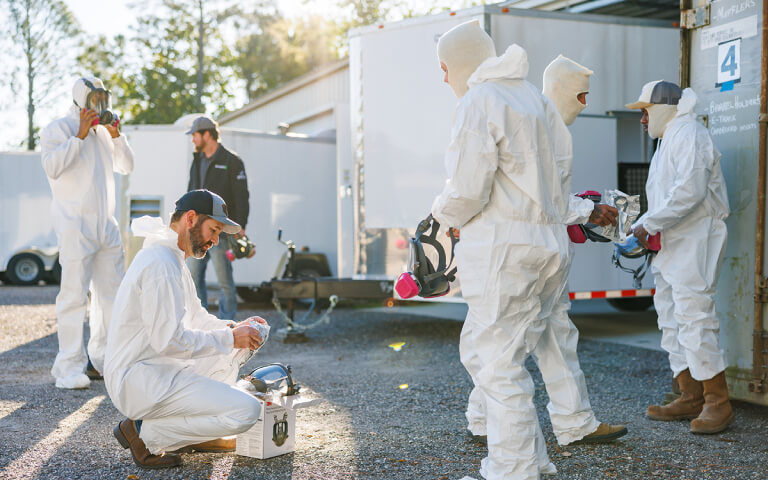
- Use required PPE including respirators, gloves, and protective suits
- Ensure proper ventilation during spray foam application
- Follow manufacturer specifications for material handling
- Regularly inspect and maintain spray foam equipment
- Complete hands-on training before field application
FAQs
Spray foam insulation is made from two chemical components—polyol resin and isocyanate—that react and expand when combined.
It expands upon application to fill gaps and cracks, creating an air-tight insulation and moisture barrier.
Open-cell foam is lighter and flexible, while closed-cell foam is denser, offers higher R-value, and adds structural strength.
It is commonly used in residential homes, commercial buildings, roofing systems, and specialty applications like cold storage.
Professional spray foam rigs are required to properly heat, mix, and apply materials for consistent performance.